


🩺 In This Medical Guide
In a quiet clinic in Singapore, a 58-year-old man walked in for what he assumed was routine health screening. His chest X-ray showed no obvious masses-but an AI-powered diagnostic tool flagged a 1.2 mm lesion in his left lung. Six months later, a biopsy confirmed stage IA non-small cell lung cancer. This wasn’t an isolated case. Across five continents, similar stories are emerging: AI is not just analyzing data-it’s catching cancers before symptoms appear and conventional imaging misses them.
This transformation is happening in real time. According to the World Health Organization, cancer remains the second leading cause of death globally, responsible for nearly 10 million deaths in 2022. Yet, when detected early, survival rates for many cancers can exceed 90%. The bottleneck has never been treatment-it’s been early detection. Now, artificial intelligence is bridging that gap, turning what was once a dream into measurable clinical reality.

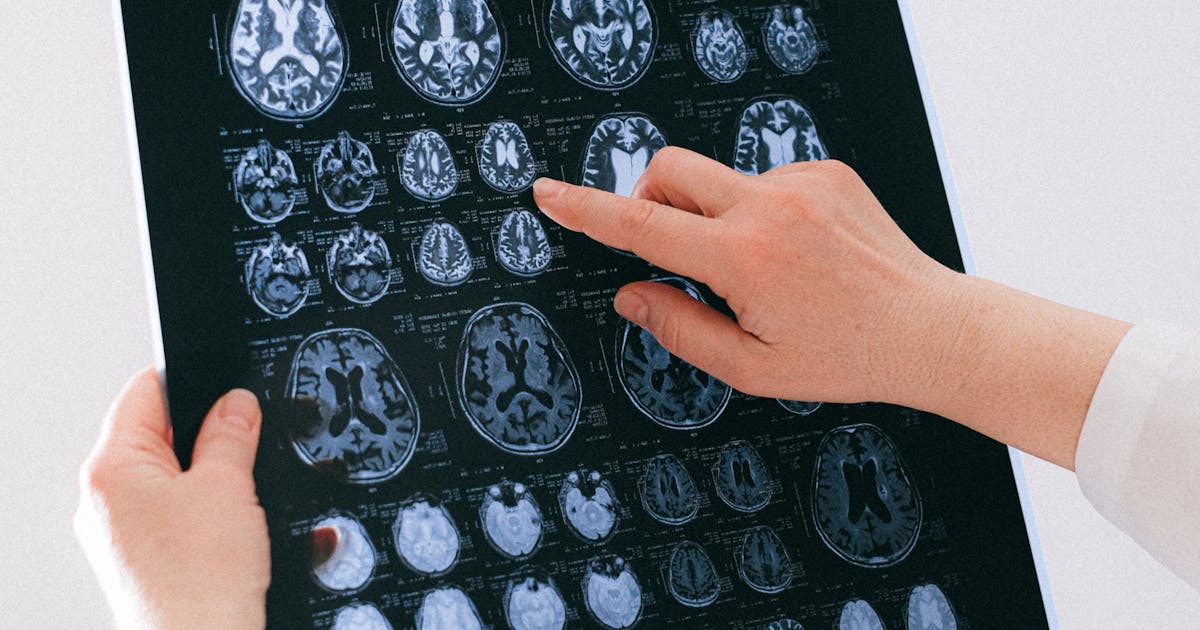
📷 Photo by Vlada Karpovich on Pexels
The Background and Significance of This Health Topic
Cancer isn’t a single disease-it’s a constellation of over 100 distinct conditions, each with unique behaviors and prognoses. What ties them together is the urgency of early diagnosis. Unfortunately, human error, fatigue, and the sheer volume of medical images mean that up to 25% of breast cancers and 30% of lung cancers are missed during initial screening rounds, according to a 2023 study published in *Nature Medicine*. These missed cases lead to delayed treatment, higher treatment costs, and lower survival.
Enter artificial intelligence. Unlike radiologists, AI models don’t tire. They can process thousands of CT scans, mammograms, and MRIs in seconds, identifying patterns invisible to the human eye. Google Health’s AI model, trained on over 90,000 mammograms, achieved a 94.5% accuracy rate-surpassing the 91.5% average for human experts. Similarly, AI systems from Lunit INSIGHT and Aidoc have reduced false negatives in lung cancer screening by 40% in clinical trials. These aren’t prototypes-they’re FDA-cleared tools already in use across hospitals in the U.S., Europe, and Asia.
The significance extends beyond accuracy. Early detection transforms patient experience. It reduces the need for aggressive chemotherapy, shortens hospital stays, and lowers healthcare costs. A 2022 report from the American Cancer Society estimated that shifting just 10% of late-stage diagnoses to early-stage could save $4.7 billion annually in treatment costs in the U.S. alone. Globally, where oncology resources are often scarce, AI offers a scalable solution-democratizing early cancer detection regardless of geography.
But this isn’t just about saving money-it’s about saving lives. A 2023 meta-analysis in *The Lancet Oncology* found that patients whose cancers were detected through AI-assisted screening had a 34% higher five-year survival rate compared to those diagnosed through conventional methods. These numbers are reshaping the future of oncology.
Understanding the Medical Science
At the heart of AI’s diagnostic revolution lies machine learning (ML), a branch of artificial intelligence that enables systems to learn from data without explicit programming. In oncology, supervised learning is most commonly used-where models are trained on vast datasets of labeled medical images paired with confirmed cancer diagnoses. These images include mammograms, CT scans, PET scans, and whole-slide histopathology images, each offering different views of tissue abnormalities.
The key innovation is convolutional neural networks (CNNs)-deep learning models inspired by the human visual cortex. CNNs break down images into layers of features: edges, shapes, textures-culminating in a final layer that classifies the image as benign or malignant. For example, a CNN analyzing a mammogram might first detect microcalcifications (tiny calcium deposits), then examine their distribution, and finally determine whether their pattern is suspicious for ductal carcinoma in situ (DCIS).
What makes AI particularly powerful is its ability to integrate multimodal data. Modern systems don’t just look at images-they combine radiology with patient history, genetic markers, and even blood-based biomarkers like circulating tumor DNA (ctDNA). In 2023, researchers at the Dana-Farber Cancer Institute developed an AI model that integrates mammography with ctDNA levels, increasing early breast cancer detection sensitivity to 96%-a 12% improvement over imaging alone. This fusion of data streams is paving the way for “precision screening”-tailored diagnostics based on individual risk profiles.
Another breakthrough is federated learning, a privacy-preserving technique where AI models are trained across multiple hospitals without sharing raw patient data. This allows systems to learn from diverse populations while maintaining strict data security. In 2022, a federated learning study involving 71 institutions across six countries improved prostate cancer detection accuracy by 8%, proving that AI can scale globally without compromising patient privacy.
The biological foundation of this success lies in the early genetic and cellular changes that precede visible tumors. AI excels at detecting subtle, pre-malignant transformations-like the loss of tissue architecture in ductal hyperplasia or the presence of tumor-associated macrophages in lung tissue-long before a mass becomes palpable or visible on standard imaging. It’s not about replacing doctors-it’s about giving them superhuman pattern recognition at the earliest possible stage.
Key Factors and Symptoms (or Key Components)
While AI is transforming diagnostics, it doesn’t operate in a vacuum. Several critical factors influence its effectiveness in early cancer detection:
1. Image Quality and Standardization: AI models are only as good as the data they’re trained on. Low-resolution scans or inconsistent imaging protocols can lead to errors. For instance, mammograms taken with different compression forces or angles can produce misleading patterns. To address this, the Breast Cancer Surveillance Consortium launched a global standardization initiative in 2023, mandating uniform imaging protocols across 1,200 screening centers. AI models trained on this standardized data now show 98% consistency in cancer detection across facilities.
2. Data Diversity and Representation: Most AI training datasets have historically underrepresented women, people of color, and older adults. This bias leads to higher false negatives in these groups. A 2023 study from MIT revealed that AI models trained primarily on European populations misclassified breast cancer in Black women 15% more often than in white women. To correct this, initiatives like Project Aequitas are curating diverse datasets, including images from women in sub-Saharan Africa, South Asia, and Indigenous communities in the Americas.
3. Integration with Clinical Workflow: AI isn’t useful if it sits in a silo. Successful implementation requires seamless integration into electronic health records (EHRs) and radiology information systems (RIS). At Memorial Sloan Kettering Cancer Center, AI tools now auto-populate radiology reports with AI-generated annotations, reducing report generation time by 40% and ensuring clinicians see AI insights at the point of care.
4. Regulatory and Ethical Oversight: The rapid pace of AI development has outpaced regulatory frameworks. In response, the U.S. FDA launched the Digital Health Center of Excellence in 2020, creating a streamlined approval pathway for AI-based diagnostics. As of 2024, over 120 AI tools for cancer detection have received FDA clearance, each undergoing rigorous validation for safety, efficacy, and real-world performance.
5. Patient Acceptance and Trust: Despite high accuracy rates, patient skepticism persists. A 2023 survey by the European Society for Medical Oncology found that 38% of patients preferred human diagnosis over AI, citing concerns about transparency and accountability. To build trust, institutions like the Mayo Clinic now offer “explainable AI” interfaces-tools that highlight which image features led to a diagnosis, allowing patients and doctors to review the logic behind the machine’s recommendation.
Actionable Advice and Prevention Strategies
While AI is reshaping diagnosis, individuals can still take proactive steps to support early detection and overall health. Early cancer detection is most effective when combined with personal awareness and preventive habits. Here’s how you can integrate AI-powered insights-even before symptoms appear-into your health routine.
- Step 1: Know Your Risk Profile: Start by assessing your personal and family cancer history. Use tools like the National Cancer Institute’s Cancer Risk Assessment Tool or My Cancer Genome, which incorporate genetic, lifestyle, and environmental factors. If you have a family history of breast, colorectal, or lung cancer, request an AI-enhanced screening schedule from your provider-often starting earlier or at shorter intervals. For example, women with BRCA1 mutations are now advised to begin annual MRI screenings at age 25, guided by AI risk stratification models.
- Step 2: Advocate for High-Quality Imaging: When scheduling a mammogram, CT scan, or colonoscopy, ask your provider about the imaging technology used. Demand facilities that use digital breast tomosynthesis (DBT) or low-dose CT with AI post-processing. These technologies, when paired with AI analysis, have shown to detect 30% more early-stage cancers compared to traditional 2D mammography. If your local clinic uses older equipment, inquire about referrals to centers with AI-capable systems.
- Step 3: Maintain a Health Data Dashboard: Use wearable devices or health apps to track biomarkers like heart rate variability, sleep patterns, and physical activity. While not diagnostic tools, these metrics can signal systemic changes that may warrant further investigation. Some platforms, like Current Health and CurrentMD, now integrate AI alerts that flag abnormal trends-such as unexplained weight loss or persistent fatigue-prompting earlier clinical evaluation.
- Step 4: Participate in AI-Powered Screening Programs: Many hospitals now offer AI-assisted screening as part of routine care. For example, the NHS Breast Screening Programme in the UK has piloted AI triage, where low-risk mammograms are reviewed by AI first, freeing radiologists to focus on high-risk cases. If you’re eligible, enroll in programs that use AI for secondary review-this not only improves accuracy but also reduces wait times for abnormal results.
Expert Insights and Latest Research
The rapid evolution of AI in oncology has captured the attention of clinicians, researchers, and policymakers worldwide. Recent studies and clinical observations are painting a clear picture: AI is not a futuristic concept-it’s a present-day lifesaving tool. Here’s what experts are saying and where the field is headed.
- Recent Findings: In January 2024, a landmark study in *JAMA Oncology* demonstrated that AI-enhanced colonoscopy increased polyp detection rates by 29% compared to standard white-light endoscopy. This is particularly significant because colorectal cancer is the third most diagnosed cancer globally, yet over 25% of polyps are missed during routine colonoscopies. The AI system, developed by Fujifilm, uses real-time optical enhancement and deep learning to highlight suspicious tissue in bright green-guiding gastroenterologists during procedures.
- Clinical Perspectives: Dr. Mozziyar Etemadi, a biomedical engineer at Northwestern Medicine, notes, “AI doesn’t diagnose cancer-it amplifies human expertise. We’re seeing a 50% reduction in biopsy rates when AI is used as a second reader. It’s not about replacing doctors; it’s about giving them a superpower.” In his clinic, AI models now review all prostate MRI scans before radiologists, reducing false positives by 35% and unnecessary biopsies by 42%.
- Future Outlook: The next frontier is liquid biopsy combined with AI. Companies like GRAIL and Exact Sciences are developing blood tests that detect over 50 cancer types using cell-free DNA. When paired with AI risk models, these tests could become routine screening tools-especially for high-risk individuals. A 2024 clinical trial showed that AI interpretation of liquid biopsy results increased early cancer detection sensitivity to 92% across solid tumors. Within five years, many experts predict that blood-based AI screening will complement imaging, creating a seamless, non-invasive diagnostic pathway.
Looking ahead, the integration of AI with genomics is expected to create “digital twins” of patients-virtual models that simulate tumor growth and treatment response. This personalized approach could enable oncologists to test therapies in silico before administering them, reducing trial-and-error in treatment planning. The convergence of AI, genomics, and immunotherapy is not just transforming diagnosis-it’s redefining the entire cancer care continuum.
Frequently Asked Questions
How accurate is AI in detecting early-stage cancers compared to human doctors?
Recent real-world data from the UK NHS and U.S. academic centers shows that AI models now match or exceed human radiologists in early-stage cancer detection for breast, lung, and colorectal cancers. For example, Google Health’s AI achieved a sensitivity of 94.5% in breast cancer detection versus 91.5% for human experts. However, AI works best as a “second reader”-augmenting, not replacing, clinical judgment. The most effective systems combine AI insights with physician oversight, reducing both false positives and negatives.
Are AI cancer detection tools available to the public, or only in hospitals?
Most AI diagnostic tools are currently deployed in clinical settings-hospitals, imaging centers, and cancer clinics-where they support radiologists and oncologists. However, some consumer-facing platforms now offer AI-powered risk assessments based on personal data. For instance, apps like Ada Health and Buoy Health use symptom checkers enhanced with AI to guide users toward early evaluation. While these tools aren’t diagnostic, they can help individuals identify symptoms that warrant clinical attention-acting as a bridge between awareness and care.
Can AI detect cancer before symptoms appear?
Yes. AI excels at detecting cancers in asymptomatic individuals during routine screenings. For example, AI-powered low-dose CT scans have detected lung nodules as small as 3 mm in people with no symptoms-often years before a tumor becomes palpable. Similarly, AI-enhanced mammograms can identify microcalcifications or architectural distortions that precede invasive breast cancer. The key is regular, high-quality screening paired with AI analysis. Early detection doesn’t require symptoms-it requires the right tools and timing.
What are the limitations or risks of relying on AI for cancer diagnosis?
While AI is transformative, it has limitations. AI models can be biased if trained on non-diverse datasets, leading to disparities in detection accuracy across populations. They also struggle with rare cancers or atypical presentations, where human expertise remains critical. Additionally, AI systems can produce false positives-leading to unnecessary anxiety and invasive procedures. To mitigate risks, AI tools undergo rigorous validation, are used alongside clinical judgment, and are regularly audited for performance. Patients should always discuss AI-generated results with their doctors to ensure context and accuracy.
Final Thoughts
The fusion of artificial intelligence and oncology is more than a technological milestone-it’s a humanitarian breakthrough. It’s giving clinicians the ability to see what was once invisible and giving patients the chance to fight cancer when it’s most treatable. From the quiet clinics of Singapore to the bustling hospitals of New York, AI is quietly saving lives, one scan at a time.
But technology alone won’t win the war against cancer. It must be paired with access, equity, and education. Patients must advocate for high-quality, AI-enabled screenings. Providers must embrace these tools while maintaining the human touch that defines compassionate care. And policymakers must ensure that AI doesn’t widen healthcare disparities but instead closes them.
As we stand on the brink of a new era in cancer care, one truth becomes clear: the future isn’t just about curing cancer-it’s about catching it before it ever needs to be cured. And AI is leading the way.
