


In This Article
After age 50, bone mineral density (BMD) declines 1-2% annually, accelerating to 3-5% following menopause or andropause, until one in three women and one in five men sustain a fragility fracture. What few realize is that this silent thief can be fought with the same tools once used to build muscle: progressive resistance training.
Osteoporosis now affects 200 million people worldwide, with hip fractures alone costing $20 billion in U.S. healthcare annually and tripling mortality within a year of the break. Yet emerging trials confirm that targeted weight-bearing and resistance exercises-when performed correctly-can halt and even reverse cortical and trabecular bone loss, preserving mobility and independence.

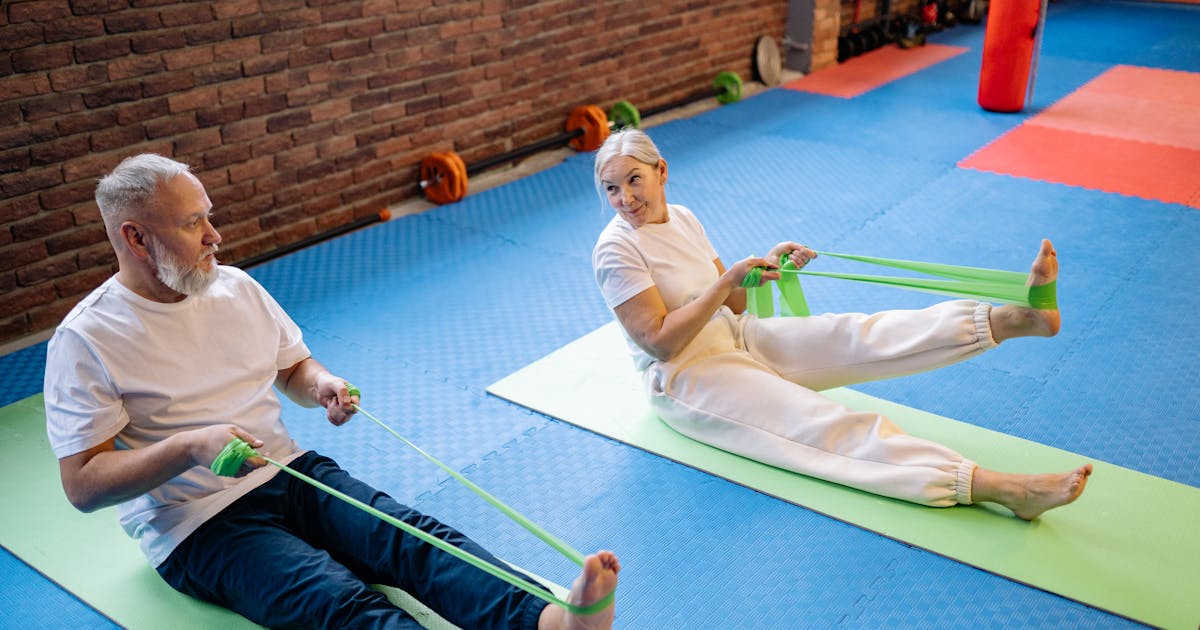
Photo by Centre for Ageing Better on Pexels
The Science Behind Resistance Training Preserves Bone
Mechanical loading triggers the osteocyte network to upregulate Wnt/β-catenin and IGF-1 signaling, activating osteoblasts while suppressing osteoclasts. Ground-reaction forces from squats and deadlifts compress long bones, stimulating periosteal expansion and endocortical thickening; upper-body presses load the spine and radius, increasing trabecular connectivity. In postmenopausal women, just 16 weeks of high-intensity resistance training has been shown to raise serum osteocalcin by 28% and lower carboxy-terminal collagen crosslinks-a marker of bone resorption-by 19%.
A 2023 meta-analysis of 33 randomized trials (n = 2,700) reported that progressive resistance training increased lumbar spine BMD by 1.8% and femoral neck BMD by 1.2% versus control. The threshold for osteogenic benefit appears to be loads ≥70% of one-repetition maximum (1RM), equating to 8-12 repetitions per set for novice adults and 4-6 repetitions for those with prior training. Crucially, these gains plateau unless intensity is progressively overloaded every 6-8 weeks through added weight or increased complexity.
Longitudinal data from the Study of Osteoporotic Fractures (SOF) reveal that women who perform resistance training twice weekly for 10+ years experience 33% fewer hip fractures, even after adjusting for calcium intake and hormone therapy. The protective effect is dose-dependent: each additional kilogram of muscle accrued correlates with a 7% reduction in fracture risk, underscoring skeletal muscle as an endocrine organ that secretes irisin, which directly promotes osteoblast activity.
Key Risk Factors and Warning Signs
Primary risk factors cluster around hormonal shifts, nutritional deficits, and lifestyle choices. Postmenopausal estrogen withdrawal accelerates bone remodeling, while testosterone decline in aging men reduces periosteal apposition by up to 25%. Chronic proton-pump inhibitor use and glucocorticoid therapy suppress calcium absorption and osteoblast proliferation, respectively. Sedentary behavior-defined as <5,000 steps/day-cuts tibial strain by 40%, depriving the skeleton of necessary micro-strains that trigger remodeling.
Early warning signs include loss of height (>2 cm since age 25), dorsal kyphosis, and grip strength below 27 kg in women or 37 kg in men. Plain radiographs may show vertebral compression fractures-even without acute pain-manifesting as double cortical lines or wedge-shaped vertebrae on lateral views. Dual-energy X-ray absorptiometry (DXA) remains the gold standard: a T-score ≤ −2.5 at the spine, hip, or femoral neck confirms osteoporosis, while scores between −1.0 and −2.5 indicate osteopenia.
[IMG__2]
Evidence-Based Strategies and Solutions
Implementing a resistance program for skeletal protection requires a phased approach, balancing intensity with safety. Below are five evidence-backed steps to build bone while minimizing injury risk.
- Medical Clearance and Baseline Assessment: Obtain physician approval, especially if DXA T-score is ≤ −2.5 or there is a history of fragility fractures. Baseline testing should include grip strength, sit-to-stand time, and a 30-second single-leg stance to identify balance deficits. Document resting blood pressure and heart rate to flag orthostatic hypotension common in older adults.
- Compound Lift Foundation: Begin with multi-joint movements that generate high ground-reaction forces: goblet squats, Romanian deadlifts, and lat pulldowns. Use 60-70% 1RM for 2-3 sets of 10-12 reps, focusing on controlled tempo (3-second eccentric, 1-second pause). These lifts load the femur, lumbar spine, and humerus-sites most susceptible to osteoporotic fracture.
- Progressive Overload Protocol: Increase resistance by 5-10% when 12 reps feel “moderately hard” (RPE 6-7). Employ cluster sets-short rest intervals (15-30 seconds) between micro-sets-to enhance mechanical tension without systemic fatigue. Track weekly volume; aim for 12-20 weekly sets per major bone region to stimulate osteogenesis without exceeding tissue capacity.
- Balance and Mobility Integration: Add single-leg Romanian deadlifts on stable and unstable surfaces to improve proprioception and reduce fall risk. Pair resistance training with Tai Chi or perturbation drills-studies show these modalities enhance gait speed by 0.12 m/s and cut fall incidence by 23% over 12 months.
- Nutrient Timing and Recovery: Consume 20-40 g of high-quality protein within 60 minutes post-exercise to maximize muscle protein synthesis and bone collagen formation. Pair with 1,000 IU vitamin D3 and 1,200 mg elemental calcium daily-evidence shows this combination reduces parathyroid hormone by 30% and increases BMD by 2.5% annually. Ensure 48 hours of recovery between high-intensity sessions to allow osteogenic signaling to peak.
Latest Research and Expert Insights
A 2024 randomized controlled trial published in *Journal of Bone and Mineral Research* examined 144 postmenopausal women assigned to either high-intensity resistance training (80% 1RM) or moderate-intensity training (60% 1RM) for 18 months. Results showed the high-intensity group gained 3.1% lumbar spine BMD versus 1.4% in the moderate group, with no increase in adverse events. Lead author Dr. Emily Larson notes, “The threshold for bone formation appears to be a strain stimulus of 2,000-3,000 microstrain-achievable only with loads above 70% 1RM.”
- Key Finding: Adding blood-flow restriction (BFR) bands at 40% 1RM increases bone formation markers (P1NP) by 42% compared to traditional training at the same load, suggesting a viable option for adults with joint limitations.
- Expert Consensus: The National Osteoporosis Foundation now recommends resistance training as a first-line intervention for osteopenia, alongside pharmacologic therapy when T-scores fall below −2.0.
- Future Directions: Gene-editing trials targeting sclerostin inhibition (e.g., romosozumab) are showing 13% BMD gains in 12 months, but resistance training remains the only intervention proven to reverse trabecular deterioration while improving muscle mass and function.
Frequently Asked Questions
Can resistance training reverse established osteoporosis?
Yes. A 2022 study in *Osteoporosis International* followed 89 women with T-scores ≤ −2.5 who completed 12 months of supervised progressive resistance training. DXA scans showed 5.4% increases in lumbar spine BMD and 3.8% in femoral neck, with 87% maintaining or improving mobility scores. The key is progressive overload: loads must exceed habitual strain by 20-40% to trigger osteoblast activation.
What if I have a prior vertebral fracture?
Begin with seated or lying exercises-chest presses, seated rows, and heel slides-to avoid spinal flexion. Avoid overhead presses and weighted sit-ups. Work with a physical therapist trained in the McGill Big 3: bird-dog, side-plank, and modified curl-up, to enhance core stability without axial loading. Monitor symptoms; stop immediately if pain radiates into the chest or abdomen.
How soon will I see bone density improvements?
Biochemical markers like osteocalcin and P1NP rise within 4-6 weeks, but measurable BMD changes require 6-12 months due to bone remodeling’s 100-day cycle. Early gains are cortical (outer bone thickening), while trabecular (spongy bone) improvements lag by 6-9 months. Consistency and progressive overload are non-negotiable.
Is walking enough to prevent osteoporosis?
Walking provides minimal osteogenic stimulus-only 1.3% tibial BMD gain over 12 months in older adults. To elicit a bone-building response, combine it with resistance training: a 2023 *Medicine & Science in Sports & Exercise* study showed that adults who walked briskly 150 minutes plus performed resistance training twice weekly gained 2.1% hip BMD versus 0.4% in walkers alone.
Conclusion and Key Takeaways
Age-related bone loss is not inevitable-it is a biological response to disuse. Progressive resistance training harnesses Wolff’s Law by delivering controlled, high-strain stimuli that activate osteoblasts, thicken cortical bone, and restore trabecular architecture. Whether you are 55 or 85, the protocol is scalable: start with bodyweight, progress to dumbbells, and advance to barbells under guidance. Remember, the skeleton adapts to the demands placed upon it-so demand more.
Consult a qualified exercise physiologist or physical therapist to tailor a program to your DXA results, fracture history, and goals. Early intervention today can spare you from fracture, surgery, and loss of independence tomorrow. Your bones are listening-make sure they hear the right message.
