


In This Article
Silent fractures, postural collapse, and loss of independence are not inevitable consequences of aging. Emerging biomechanical and clinical evidence shows that progressive resistance training-structured weightlifting programs-can slow, halt, and even reverse age-related bone loss. When combined with targeted nutrition and consistent load progression, lifting weights becomes a powerful prescription for skeletal longevity.
Bone density peaks in the third decade of life, then declines at 1-2% annually after 50. By 70, one in three women and one in five men meet diagnostic criteria for osteoporosis. Fractures cost the U.S. healthcare system $22 billion annually, with hip fractures alone increasing mortality by 20% within one year. Resistance training now ranks among the only non-pharmacologic interventions proven to preserve bone mineral density (BMD) and reduce fracture risk in older adults.

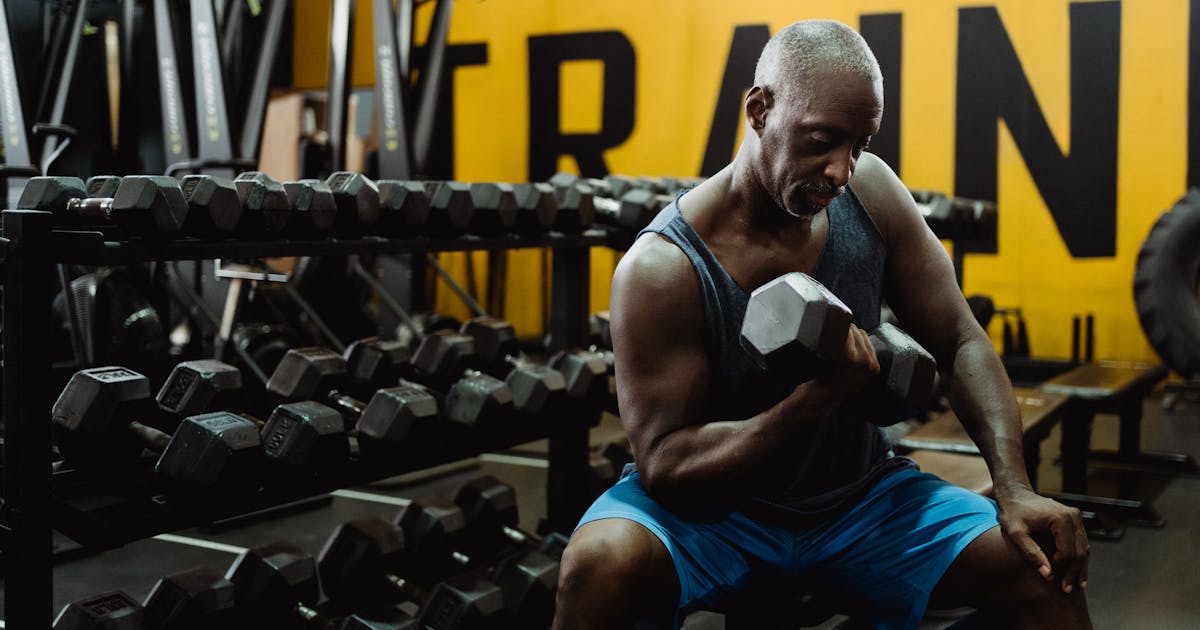
Photo by Victor Freitas on Pexels
The Science Behind Resistance Training Preserves Bone
Bone is a living tissue that adapts to mechanical load through osteocyte signaling and Wnt/β-catenin pathways. When muscles contract against external resistance, they generate tensile and compressive forces that stimulate osteoblasts-bone-forming cells-while inhibiting osteoclasts that resorb bone. This mechanotransduction process increases trabecular bone volume in the hip, spine, and femoral neck, regions most vulnerable to osteoporotic fractures.
Longitudinal studies using high-resolution peripheral quantitative computed tomography (HR-pQCT) show that 12 months of progressive resistance training can increase cortical bone thickness by up to 3.5% and trabecular bone volume fraction by 8% in postmenopausal women. These microarchitectural gains translate into measurable improvements in bone strength indices, such as failure load, which rises by 8-12% after structured programs.
Mechanical loading must exceed habitual strain to trigger osteogenesis. Progressive overload-gradually increasing weight, volume, or complexity-ensures continuous stimulation without exceeding tissue tolerance. Studies demonstrate that loads corresponding to 70-80% of an individual’s one-repetition maximum (1RM) produce the greatest osteogenic response, while lighter loads elicit minimal bone adaptation.
Key Risk Factors and Warning Signs
Primary risk factors include chronological age, female sex, low body weight, family history, and prolonged glucocorticoid use. Smoking, excessive alcohol, and prolonged inactivity further accelerate bone loss by reducing osteoblast activity and increasing inflammatory cytokines like interleukin-6. Secondary contributors-hyperparathyroidism, malabsorption syndromes, and autoimmune conditions-require medical evaluation before initiating resistance programs.
Warning signs include height loss greater than 2 cm between clinic visits, dorsal kyphosis (dowager’s hump), and unexplained back pain. Fragility fractures-even after minor falls-signal advanced bone fragility. Dual-energy X-ray absorptiometry (DXA) remains the gold standard for diagnosis, with T-scores below −2.5 defining osteoporosis and −1 to −2.5 indicating osteopenia. Early screening is recommended for women after menopause and men over 50 with risk factors.
Evidence-Based Strategies and Solutions
Implementing a safe, effective resistance program requires careful planning, professional guidance, and progressive overload principles. The following five-step framework is derived from randomized controlled trials and clinical guidelines published in JAMA Internal Medicine and the Journal of Bone and Mineral Research.
- Medical Clearance and Baseline Testing: Obtain physician clearance, especially if cardiovascular disease, uncontrolled hypertension, or severe osteoporosis exists. Baseline DXA and functional assessments-grip strength, gait speed, and balance tests-inform program design and track progress.
- Exercise Selection and Progression: Prioritize multi-joint movements that load the spine, hip, and wrist. Squats, deadlifts, overhead presses, and bent-over rows recruit large muscle groups and generate high joint reaction forces. Begin with bodyweight or light resistance (40-60% 1RM), progressing by 2-5% weekly when 12 repetitions can be completed with good form.
- Frequency and Volume: Train major muscle groups 2-3 times per week on non-consecutive days to allow bone remodeling during rest. Accumulate 150-180 minutes of moderate-to-vigorous resistance activity weekly, split into 3-4 sessions of 45-60 minutes each. Higher volumes (>12 sets per muscle group weekly) yield greater BMD gains but increase injury risk without proper technique.
- Load Intensity and Technique: Use 6-12 repetitions per set at 60-80% 1RM, ensuring controlled tempo (2-3 seconds eccentric, 1 second concentric). Incorporate balance challenges-single-leg variations, unstable surfaces-to enhance neuromuscular control and reduce fall risk. Consider supervised sessions initially to correct form and minimize injury.
- Nutrition and Recovery: Consume 1.0-1.2 g/kg protein daily, distributed across meals to stimulate muscle protein synthesis. Ensure adequate calcium (1000-1200 mg/day) and vitamin D (800-2000 IU/day) intake, with higher doses for individuals with deficiency. Schedule 48 hours between sessions targeting the same muscle group to allow bone remodeling and collagen repair.

Photo by Alena Darmel on Pexels
Latest Research and Expert Insights
A 2023 meta-analysis in the British Journal of Sports Medicine synthesized 64 trials involving 6,000 adults over 50. Progressive resistance training reduced lumbar spine BMD loss by 1.3% and femoral neck loss by 0.7% compared to controls, translating to a 19% reduction in vertebral fracture risk. Programs lasting 12 months or longer produced the largest gains, with intensity above 70% 1RM driving microarchitectural improvements visible on HR-pQCT.
- Key Finding: A 2022 randomized trial in Osteoporosis International showed that adding vibration plates to resistance training increased hip BMD by 2.1% versus resistance alone, suggesting potential synergistic benefits for individuals unable to lift heavy loads.
- Expert Consensus: The National Osteoporosis Foundation recommends resistance training as a first-line strategy for skeletal preservation, combined with fall-prevention education and medication when indicated. They advise screening for vertebral fractures in all postmenopausal women with height loss or kyphosis, as 70% of vertebral fractures are asymptomatic.
- Future Directions: Researchers are investigating low-magnitude high-frequency vibration (LMHFV) devices and whole-body vibration platforms as adjunct therapies. Early trials show promise in reducing bone turnover markers, though long-term fracture reduction data remain limited. Wearable sensors that measure ground reaction forces during daily activities may soon personalize loading prescriptions.
Frequently Asked Questions
Can I start resistance training if I already have osteoporosis?
Absolutely, but with modifications. Avoid high-impact activities and exercises that involve spinal flexion or twisting under load. Focus on low-back-friendly movements like seated rows, leg presses, and machine-based chest presses. Work with a physical therapist or certified strength coach experienced in osteoporosis management to design a safe, effective program.
How soon will I see bone density improvements?
Bone remodeling occurs in 3-6 month cycles. Visible BMD gains on DXA typically appear after 12 months of consistent training, though microarchitectural improvements can be detected earlier with HR-pQCT. Functional benefits-improved balance, strength, and pain reduction-often precede measurable density changes.
Is walking enough to maintain bone density?
Walking provides modest benefits for the hip and spine but insufficient mechanical stimulus to halt trabecular bone loss in the hip and femur. Research shows that brisk walking increases hip BMD by only 0.5-1.0% annually, compared to 1-3% with resistance training. Combine walking with targeted resistance exercises to maximize skeletal benefits.
Can resistance bands replace free weights for bone health?
Resistance bands can maintain and modestly improve bone density in individuals with low baseline strength or mobility limitations. However, they rarely provide the high-force stimuli necessary for significant osteogenesis. For adults over 50, incorporate both bands and weights, prioritizing progressive overload regardless of equipment type.
Conclusion and Key Takeaways
Age-related bone loss is not an irreversible decline but a modifiable process. Progressive resistance training offers a safe, scalable, and cost-effective strategy to preserve bone density, reduce fracture risk, and maintain independence in later life. By combining scientific principles of load magnitude, frequency, and progression with proper nutrition and recovery, older adults can reclaim control over their skeletal health.
Consult a healthcare provider before starting any strength program, especially if you have osteoporosis, cardiovascular disease, or joint limitations. Pair your training with regular DXA monitoring and fall-prevention strategies-balance exercises, home safety assessments, and vision checks. Bone health is a lifelong investment; the best time to start is today, the second-best time is now.
