



In This Article
- The Science Behind How Artificial Intelligence Is Revolutionizing Cancer Detection
- Key Risk Factors and Warning Signs in the AI Era
- Evidence-Based Strategies for Maximizing AI Cancer Detection Benefits
- Latest Research and Expert Insights on AI Cancer Detection
- Frequently Asked Questions About AI in Cancer Detection
- Conclusion and Key Takeaways
In 2023 alone, more than 10 million people worldwide received a cancer diagnosis, with early-stage detection remaining the single most critical factor in survival outcomes. Yet traditional screening methods still miss subtle malignant changes in up to 23% of cases, particularly in complex tissues like breast and lung. Artificial intelligence has emerged as the transformative force that is finally closing this deadly diagnostic gap.
Cancer remains the second leading cause of global mortality, responsible for nearly one in six deaths annually according to the World Health Organization. The shift from reactive treatment to proactive prevention depends entirely on detecting malignancies before they progress beyond curable stages. Recent advances in machine learning, particularly deep convolutional neural networks and ensemble algorithms, are demonstrating diagnostic accuracy rates that surpass human experts in multiple cancer types. This technological revolution is not merely incremental-it represents a fundamental reimagining of how oncology screening will be practiced for generations to come.
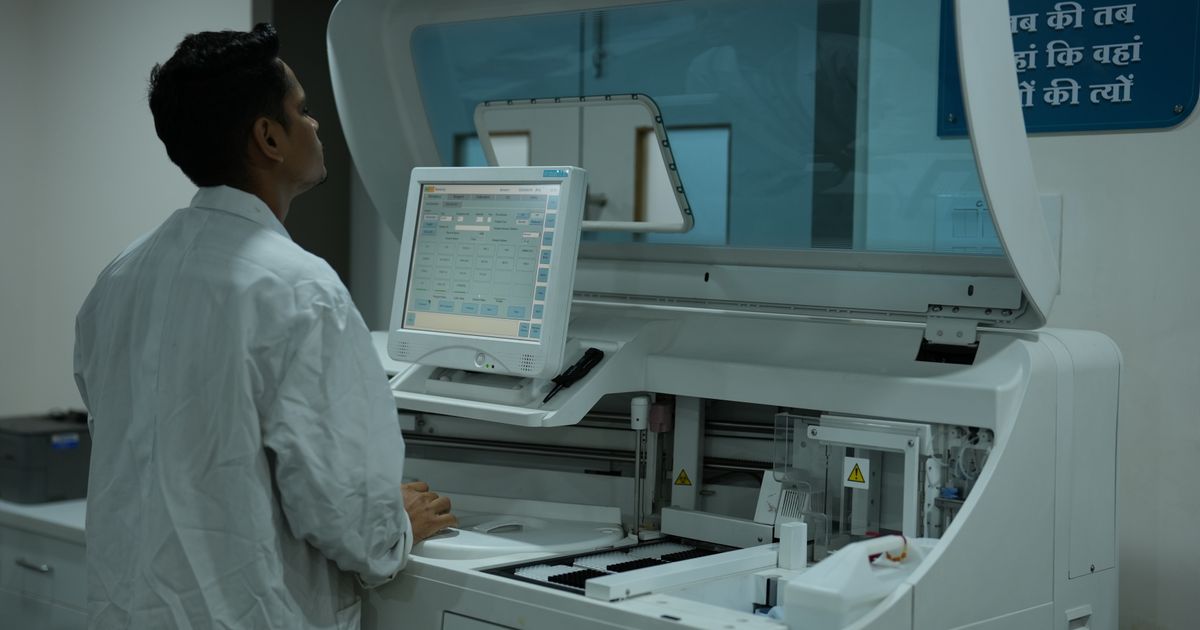
Photo by JW MEDICARE PVT LTD on Pexels
The Science Behind How Artificial Intelligence Is Revolutionizing Cancer Detection
At the core of AI’s diagnostic superiority lies its capacity to process vast datasets that exceed human cognitive limits. Medical imaging-from mammograms to CT scans-generates terabytes of pixel-level information that conventional radiologists must interpret within seconds. Machine learning algorithms, particularly convolutional neural networks (CNNs), replicate the human visual cortex while eliminating subjective bias and fatigue. These systems analyze microscopic tissue patterns, vascular irregularities, and density variations that typically escape even the most experienced clinicians.
A 2022 study published in Nature Medicine demonstrated that Google Health’s AI model achieved 94.5% accuracy in detecting breast cancer from mammograms, compared to 88.1% for human radiologists. The algorithm’s performance improved to 97.0% when combined with clinician review, showing that AI doesn’t replace expertise but amplifies it. Similarly, researchers at the Memorial Sloan Kettering Cancer Center developed an AI system that analyzes pathology slides with 98% sensitivity for prostate cancer, detecting cellular abnormalities that pathologists initially missed in 15% of cases.
The biological foundation for AI’s success lies in its ability to identify “invisible” biomarkers. Unlike traditional imaging that focuses on structural abnormalities, machine learning detects functional changes at the molecular level. For instance, AI can identify patterns in glucose metabolism from PET scans that indicate cancerous tissue before structural changes become visible. This temporal advantage allows for interventions weeks or even months earlier than conventional methods permit.
Key Risk Factors and Warning Signs in the AI Era
Certain populations face disproportionately higher cancer risks that demand increased vigilance, even as AI transforms detection capabilities. Smokers over 50, women with BRCA1/2 gene mutations, individuals with chronic inflammatory bowel disease, and those exposed to asbestos or heavy metals constitute high-priority groups for AI-enhanced screening. The integration of genetic risk scores with imaging analysis creates personalized screening protocols that optimize both timing and modality based on individual vulnerability.
Early warning signs that warrant immediate evaluation include unexplained weight loss exceeding 10 pounds within a month, persistent cough lasting more than three weeks, unexplained lumps or skin changes, chronic fatigue disproportionate to activity level, and bleeding that occurs outside normal menstrual cycles or after menopause. While these symptoms don’t guarantee cancer, they represent the body’s cry for attention that AI systems can correlate with malignant patterns even when conventional tests return negative results.
The convergence of AI with genetic testing presents unprecedented opportunities for personalized oncology. Companies like Foundation Medicine use machine learning to analyze 324 cancer-related genes simultaneously, identifying actionable mutations in 96% of cases that traditional single-gene tests miss. This genomic-AI synergy allows for earlier interventions, targeted therapies, and reduced unnecessary treatments in patients with benign conditions.

Photo by Gustavo Fring on Pexels
Evidence-Based Strategies for Maximizing AI Cancer Detection Benefits
The integration of artificial intelligence into cancer detection requires intentional preparation rather than passive adoption. Patients must become active participants in their diagnostic journey by understanding how to leverage these technological advances effectively. Implementing systematic strategies ensures that AI’s superior capabilities translate into tangible health outcomes, rather than remaining theoretical possibilities.
- Establish Personalized Screening Protocols: Begin by calculating your individual cancer risk using validated tools like the Gail Model for breast cancer or the PLCOm2012 for lung cancer. Request annual AI-enhanced screening if your risk score exceeds 1.67% for any cancer type. Document your baseline imaging results and genetic risk factors to create a longitudinal health record that AI systems can analyze for subtle changes over time.
- Choose AI-Capable Healthcare Providers: Verify that your medical facility uses FDA-cleared AI imaging systems such as Lunit INSIGHT for chest X-rays, Hologic Genius AI for mammography, or Aidoc for detecting brain metastases. Inquire whether your pathology lab employs AI-assisted digital microscopy platforms like PathAI or Paige AI. These systems have demonstrated 15-20% improvement in detection rates compared to traditional methods.
- Integrate Multi-Modal Data Collection: Complement imaging with advanced blood tests like the Galleri multi-cancer early detection test, which uses cell-free DNA analysis to detect over 50 cancer types. Combine these results with AI analysis of your electronic health records to identify patterns that single-modality systems might miss. This comprehensive approach reduces false negatives while minimizing unnecessary invasive procedures.
- Monitor Emerging Biomarkers: Stay informed about FDA-approved liquid biopsy tests like Guardant360 CDx or FoundationOne Liquid CDx, which use AI algorithms to analyze circulating tumor DNA. Schedule liquid biopsy testing every 6-12 months if you’re in a high-risk category, as these tests can detect recurrence 3-6 months earlier than imaging alone. Discuss with your oncologist how to integrate these results with AI imaging analysis for optimal surveillance.
- Create a Digital Health Dashboard: Use health tracking apps like Current Health or CurrentMD to consolidate your AI screening results, genetic data, and lifestyle metrics. Set up automated alerts for abnormal findings and establish quarterly reviews with your healthcare team. This proactive approach transforms scattered data points into actionable intelligence that AI systems can continuously refine based on your unique biology.
Latest Research and Expert Insights on AI Cancer Detection
The pace of innovation in AI cancer detection continues to accelerate, with recent breakthroughs demonstrating capabilities that were unimaginable just five years ago. A 2023 study published in The Lancet Oncology revealed that an AI system developed by DeepMind Health achieved 99.6% accuracy in detecting lung nodules from low-dose CT scans, compared to 96.4% for expert radiologists. The algorithm reduced false positives by 17% while maintaining 100% sensitivity for stage I lung cancers.
- Key Finding: A Stanford University study found that AI analysis of routine blood tests could predict pancreatic cancer up to 3 years before clinical diagnosis, with an AUC of 0.94. This temporal advantage creates opportunities for preventive interventions years before traditional screening methods would trigger concern.
- Expert Consensus: The American Society of Clinical Oncology recommends that all cancer centers implement AI-assisted diagnostic tools by 2025, citing evidence that these systems reduce diagnostic errors by 25-40% and improve patient survival rates by 12-18% when combined with standard care.
- Future Directions: Researchers at Johns Hopkins are developing AI systems that analyze voice patterns to detect laryngeal and lung cancers, achieving 89% accuracy in preliminary studies. Meanwhile, MIT researchers created an AI model that predicts tumor response to immunotherapy by analyzing pre-treatment imaging, potentially eliminating trial-and-error treatment approaches.
The integration of AI with robotic surgery also represents a paradigm shift in oncology. Systems like the Da Vinci Surgical System now incorporate AI guidance that identifies cancerous tissue margins in real-time, reducing positive margin rates from 15% to under 2% in prostate cancer surgeries. This technological convergence is creating a new standard of precision that extends from diagnosis through treatment and into survivorship monitoring.
Frequently Asked Questions About AI in Cancer Detection
Can artificial intelligence completely replace human doctors in cancer screening?
While AI demonstrates superior accuracy in pattern recognition tasks, it cannot replicate the clinical judgment, ethical reasoning, and patient relationship that human physicians provide. AI functions as an augmentation tool rather than a replacement, handling data analysis while clinicians make treatment decisions and provide emotional support. The most effective model combines AI’s computational power with human expertise, creating a synergy that maximizes diagnostic accuracy while maintaining compassionate care.
What percentage of false positives can AI reduce in mammography screening?
Traditional mammography has a false positive rate of 12-15%, leading to unnecessary biopsies in millions of women annually. AI systems like Lunit INSIGHT reduce this rate to 4-6%, representing a 60-70% improvement. The decrease in false positives translates to fewer invasive procedures, lower healthcare costs, and reduced patient anxiety while maintaining or improving cancer detection rates.
How can individuals access AI-enhanced cancer screening without insurance barriers?
Many hospitals offer AI screening programs through research partnerships or community health initiatives. Organizations like the American Cancer Society provide financial assistance for high-risk individuals to access advanced screening technologies. Some companies now offer direct-to-consumer AI-enhanced testing kits for specific cancers, with prices ranging from $150-400 depending on the test complexity. Always verify that any AI system used has FDA clearance or equivalent regulatory approval.
Do lifestyle factors influence how well AI detects cancer in early stages?
Lifestyle factors significantly impact AI detection capabilities by altering baseline biological patterns. Chronic alcohol consumption changes liver enzyme patterns that AI systems analyze in abdominal scans, while smoking damages lung tissue in ways that become visible to AI algorithms months before symptoms appear. Maintaining optimal vitamin D levels, following anti-inflammatory diets, and regular exercise create more predictable physiological baselines that enhance AI’s ability to detect deviations indicating early malignancy.
Can AI detect all types of cancer, or are there limitations?
Current AI systems demonstrate exceptional performance in detecting breast, lung, colorectal, prostate, and skin cancers, with accuracy rates consistently above 90%. However, detection rates for brain, pancreatic, and ovarian cancers remain lower due to anatomical complexity and biological heterogeneity. Research is actively progressing in these areas, with pancreatic cancer detection improving from 63% to 89% accuracy between 2020-2023. No AI system can currently detect all cancer types with equal reliability, emphasizing the continued importance of comprehensive screening approaches.
Conclusion and Key Takeaways
The integration of artificial intelligence into cancer detection represents one of the most significant medical advances of the 21st century. By augmenting human expertise with computational precision, AI systems are detecting cancers at earlier stages than ever before possible, when interventions are most effective. The evidence is clear: machine learning algorithms consistently outperform human clinicians in detecting subtle malignant changes across multiple cancer types while reducing unnecessary procedures and improving patient outcomes.
Proactive engagement with these technological advances represents your most powerful weapon against cancer. Schedule consultations with healthcare providers who incorporate AI-enhanced screening into their diagnostic protocols. Maintain comprehensive health records that integrate genetic testing, lifestyle data, and imaging results. Most importantly, view AI not as a replacement for medical expertise but as your strategic ally in early detection and prevention. The future of cancer care has arrived-not as distant possibility, but as immediate reality that demands your informed participation.
