


🩺 In This Medical Guide
In 2024, a silent revolution is unfolding in living rooms, hospital wards, and even on city jogging trails. It’s not a medical breakthrough in a lab-it’s happening in the palm of a patient’s hand. Wearable health technology, once dismissed as fancy fitness trackers, has evolved into a cornerstone of remote patient monitoring (RPM). With over 30% of U.S. adults now using some form of wearable device, these technologies are no longer optional tools-they are transforming the way chronic diseases are managed, hospital readmissions are reduced, and healthcare is delivered. This transformation is not just about convenience; it’s about saving lives through early detection, continuous insight, and personalized care.
The Background and Significance of This Health Topic
The integration of wearable health technology into patient care reflects a broader shift toward proactive, data-driven medicine. Chronic diseases such as diabetes, heart disease, and hypertension affect more than 60% of adults globally and account for over 70% of healthcare spending in many countries. Traditional monitoring-relying on intermittent office visits-often fails to capture the daily fluctuations that determine disease progression. For instance, a patient with hypertension may have normal blood pressure during a clinic visit but experience dangerous spikes at home. Wearable devices now bridge this gap by providing real-time data streams that allow clinicians to intervene before complications arise.

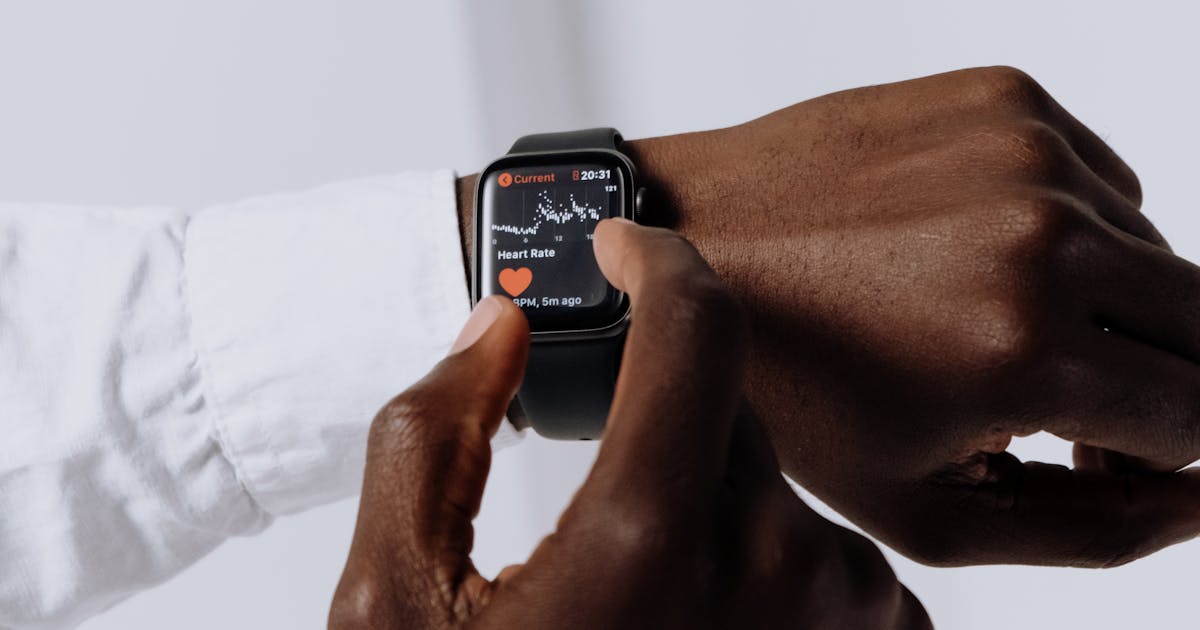
📷 Photo by Mikhail Nilov on Pexels
The COVID-19 pandemic accelerated this shift by forcing healthcare systems to adopt remote solutions. Studies show that remote patient monitoring reduced hospital readmissions by up to 38% in heart failure patients and cut emergency department visits by 25% in diabetic cohorts. This wasn’t just a temporary fix-it demonstrated that technology could deliver high-quality care outside traditional settings. As a result, the global RPM market is projected to grow from $31.1 billion in 2023 to $109.4 billion by 2028, driven by rising chronic disease burden and consumer demand for continuous health insight.
Understanding the Medical Science
At the heart of wearable health technology lies a fusion of biosensors, microprocessors, and wireless connectivity. Modern wearables incorporate multiple sensing modalities, including photoplethysmography (PPG) for heart rate, electrochemical sensors for glucose, and impedance sensors for hydration. For example, the Apple Watch Series 8 uses dual-frequency PPG and electrical heart sensors to calculate blood oxygen levels, detect atrial fibrillation, and even perform on-demand ECGs. These sensors work by emitting light into tissue and measuring its absorption or reflection, a process governed by Beer-Lambert law in optics. The resulting data is processed by onboard algorithms trained on thousands of clinical datasets to distinguish between normal and pathological signals.
Beyond hardware, the real innovation lies in the software. Machine learning models embedded in wearable devices analyze physiological data in real time, identifying anomalies such as irregular heart rhythms or sudden glucose drops before symptoms appear. A 2023 study published in *Nature Medicine* found that AI-powered wearables detected atrial fibrillation with 97% sensitivity and 98% specificity-results comparable to 24-hour Holter monitoring. This precision is achieved through federated learning, where models are trained across decentralized devices without compromising patient privacy, ensuring compliance with regulations like HIPAA and GDPR.
Key Factors and Symptoms (or Key Components)
Wearable health systems are built around three core components: sensing, processing, and communication. Sensing modules detect physiological signals with increasing accuracy-measuring not just heart rate and steps, but blood pressure, respiratory rate, skin temperature, and even blood alcohol levels. The KardiaMobile ECG by AliveCor, for example, uses a handheld sensor to record a medical-grade 30-second ECG, detecting conditions like supraventricular tachycardia or prolonged QT intervals. These devices often require FDA clearance or CE marking, ensuring they meet clinical standards for accuracy and safety.
Processing occurs via edge computing-where data is analyzed on the device itself-reducing latency and preserving battery life. The communication layer leverages Bluetooth Low Energy (BLE) and Wi-Fi to transmit encrypted data to cloud platforms or smartphone apps. Here, the patient’s data is integrated into electronic health records (EHRs) through HL7 FHIR standards, enabling seamless sharing between care teams. This ecosystem supports continuous monitoring of high-risk patients, such as those with COPD or post-stroke rehabilitation needs. For instance, wearable oxygen saturation monitors can alert caregivers when a patient’s SpO2 drops below 90%, triggering an intervention before respiratory failure occurs.
Another key factor is patient engagement. Devices with intuitive interfaces, gamified feedback, and personalized coaching-such as continuous glucose monitors (CGMs) paired with insulin pumps-have shown to improve adherence by up to 45%. The psychological effect of seeing real-time feedback cannot be overstated: patients with diabetes using CGMs reported a 32% reduction in HbA1c levels within six months, according to a 2024 JAMA study. This highlights how wearables don’t just monitor-they motivate.
Actionable Advice and Prevention Strategies
Integrating wearable health technology into your health routine requires more than purchasing a device-it demands a strategic approach to data interpretation and lifestyle alignment. Here’s a step-by-step guide to maximizing its benefits:
- Step 1: Choose the Right Device for Your Needs: Select a wearable certified for your specific condition. If you have Type 2 diabetes, prioritize a continuous glucose monitor (CGM) like Dexcom G7. For heart health, consider a multi-sensor device like the Withings ScanWatch, which tracks heart rhythm, SpO2, and sleep apnea risk. Always verify FDA, CE, or equivalent regulatory approvals before purchasing.
- Step 2: Calibrate and Sync Regularly: Wearables require periodic calibration to maintain accuracy. For example, some fitness bands need manual input of resting heart rate or blood pressure for personalized baselines. Sync your device daily with its companion app to ensure data continuity. Enable automatic cloud backups to prevent data loss during software updates or device replacement.
- Step 3: Interpret Data in Context: A heart rate of 120 bpm isn’t inherently dangerous-it could reflect exercise, stress, or even caffeine intake. Use trends over days or weeks rather than isolated readings. Many apps provide contextual insights, such as correlating high heart rate with sleep quality or activity levels. If you see persistent anomalies, consult your healthcare provider rather than self-diagnosing.
- Step 4: Integrate with Your Care Team: Share wearable data with your physician through secure platforms like Apple Health or Google Fit. Ask your doctor to set up alert thresholds-for example, a blood pressure reading above 160/100 mmHg triggering an immediate notification. This transforms passive tracking into active care coordination, reducing the risk of silent disease progression.
Expert Insights and Latest Research
Leading cardiologists and endocrinologists are increasingly advocating for wearable-integrated care pathways. Dr. Eric Topol, a cardiologist and digital health pioneer, states, “The future of medicine is not in the hospital-it’s on the wrist.” His research at Scripps Research Institute shows that AI-driven wearables can predict sepsis onset up to 24 hours before clinical symptoms appear, based on subtle changes in heart rate variability and skin temperature.
- Recent Findings: A 2024 study in *The Lancet Digital Health* demonstrated that wearable ECG monitoring reduced stroke risk in patients with atrial fibrillation by 42% over 12 months, thanks to earlier detection and anticoagulation initiation. Another study published in *Diabetes Care* found that integrating CGMs with insulin pumps in Type 1 diabetes patients lowered severe hypoglycemia events by 60%. These results underscore the preventive power of real-time data.
- Clinical Perspectives: Dr. Atul Butte, Chief Data Scientist at UCSF Health, highlights the importance of interoperability: “The biggest hurdle isn’t the technology-it’s the fragmentation. We need wearables, EHRs, and pharmacies to speak the same language.” His team is developing open-source tools to standardize wearable data integration into clinical workflows, ensuring physicians can access actionable insights without drowning in alerts.
- Future Outlook: The next frontier includes ingestible sensors-tiny capsules that monitor gut health and medication adherence-and tattoo-like electronic skins that track glucose without needles. Startups like Notion and BioIntelliSense are already piloting FDA-cleared patches that monitor core body temperature, respiratory rate, and activity in real time. By 2026, analysts predict that 40% of routine chronic disease check-ups will be conducted via wearable-integrated telehealth visits.
Frequently Asked Questions
How accurate are wearable ECG monitors compared to traditional 12-lead ECGs?
Wearable ECGs, such as those from Apple Watch or KardiaMobile, use single-lead configurations and have shown 90-95% accuracy in detecting atrial fibrillation when compared to 12-lead ECGs. However, they are not designed to diagnose other abnormalities like bundle branch blocks or ST-segment elevation. Always follow up with a clinical ECG if symptoms persist. Accuracy improves with multiple readings over time, so wearables excel at trend analysis rather than one-time diagnosis.
Can wearable health devices reduce the need for in-person doctor visits?
While wearables cannot replace all in-person visits, they can significantly reduce unnecessary ones. In a 2023 pilot program at Mayo Clinic, 37% of routine hypertension follow-ups were converted to virtual visits using wearable blood pressure cuffs and AI chatbots for triage. High-risk patients still require periodic in-person assessments, but low-risk individuals can benefit from remote monitoring, saving time and reducing healthcare costs. The key is selecting patients whose conditions are stable and amenable to telemonitoring.
What are the risks of relying solely on wearable data for medical decisions?
False positives and false negatives are the primary risks. A wearable may flag an irregular heart rhythm that resolves spontaneously-leading to unnecessary anxiety or testing. Conversely, subtle abnormalities might be missed due to sensor limitations or poor placement. Additionally, data overload can overwhelm both patients and clinicians. The solution is to use wearables as adjunct tools, not replacements for clinical judgment. Always consult a healthcare provider before making treatment changes based solely on wearable data.
Are wearable health devices covered by insurance?
Coverage varies by country and insurer. In the U.S., Medicare and many private insurers now cover continuous glucose monitors (CGMs) for diabetic patients on intensive insulin therapy, as well as certain cardiac monitoring devices like the Zio Patch for arrhythmia detection. Some insurers also reimburse for blood pressure monitoring kits and pulse oximeters under preventive care benefits. Always check with your provider and review the device’s FDA clearance status. In Europe, several national health systems partially reimburse wearables under digital health programs.
Final Thoughts
Wearable health technology stands at the intersection of innovation and necessity-a tool that empowers patients while arming clinicians with unprecedented insight. From detecting silent arrhythmias to preventing diabetic comas, these devices are rewriting the rules of chronic disease management. Yet their true power lies not in the hardware, but in how we use the data they provide: responsibly, thoughtfully, and in partnership with healthcare professionals. As the technology matures and integration deepens, one thing is clear-wearables are not replacing doctors. They are enabling doctors to do what they do best: prevent, detect, and heal-with clarity, precision, and humanity. If you’re living with a chronic condition or caring for someone who is, the future of your health may already be on your wrist.
