


In This Article
By 2030, global cancer cases are projected to rise to 24.1 million annually-an alarming statistic that demands faster, smarter diagnostic solutions. Traditional screening methods, while essential, often miss subtle tumor patterns that only advanced computational analysis can reveal. Artificial intelligence is now stepping into this critical gap, transforming oncology from reactive treatment to proactive prevention.
Since the first documented use of mammography in the 1960s, cancer screening has relied heavily on human interpretation of medical images. Yet, despite technological advances, radiologists still face an average false-positive rate of 10-12% in breast cancer screenings, leading to unnecessary biopsies and patient anxiety. Meanwhile, lung cancer-the leading cause of cancer death worldwide-is often detected too late for effective intervention. With early-stage detection improving five-year survival rates from 20% to over 90% in some cancers, the stakes couldn’t be higher. Enter AI: a paradigm shift powered by deep learning algorithms trained on millions of annotated medical images, capable of detecting patterns invisible to the human eye.

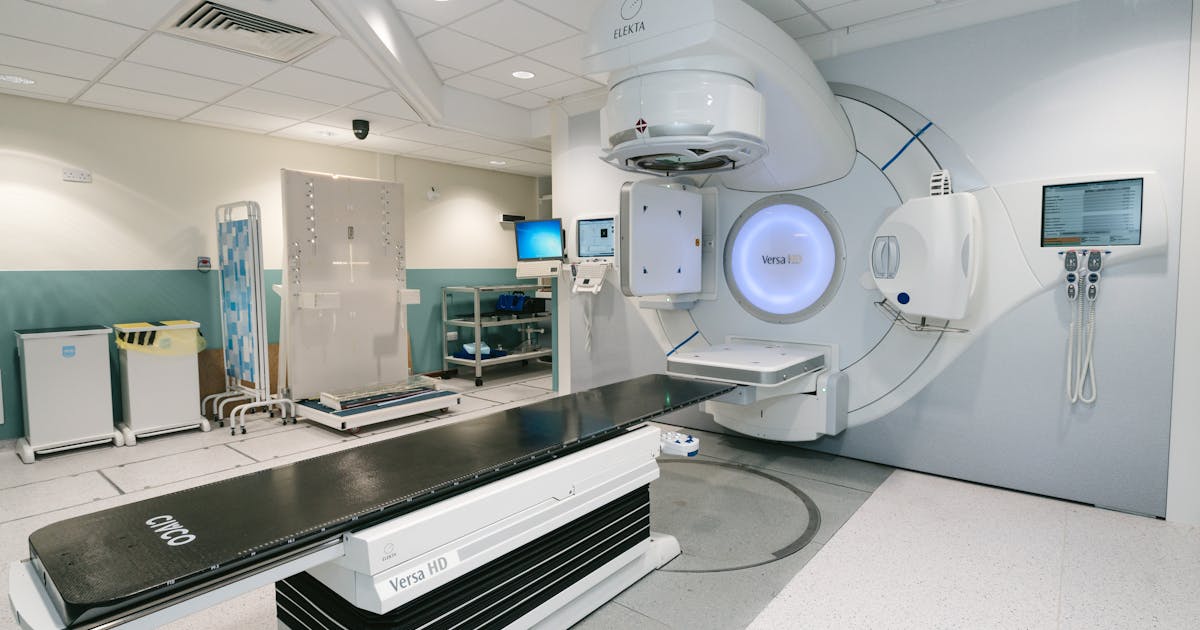
Photo by Tima Miroshnichenko on Pexels
The Science Behind How Artificial Intelligence Is Revolutionizing Cancer Detection
At the core of AI’s diagnostic revolution is convolutional neural network (CNN) architecture, a type of deep learning model specifically designed to process visual data-much like the human visual cortex. These networks analyze pixel-level details in medical images such as mammograms, CT scans, and MRIs, identifying microcalcifications, irregular tissue density, and vascular anomalies that signal malignancy. Unlike traditional computer-aided detection (CAD) systems, which relied on rule-based algorithms prone to false positives, modern AI models use supervised learning: they are trained on vast datasets of biopsy-confirmed cancer cases and healthy controls, allowing them to learn nuanced features associated with early tumor development.
One of the most groundbreaking advancements comes from Google Health’s AI system for breast cancer detection, which in a 2020 study published in *Nature* achieved a 94.4% accuracy rate in identifying breast cancer in mammograms-surpassing the performance of six expert radiologists, who averaged 88% accuracy. Similarly, Lunit INSIGHT, a South Korean AI platform, demonstrated a 98.3% sensitivity in detecting malignant lung nodules in low-dose CT scans, compared to 88.4% for human readers. These models don’t just match human performance-they surpass it, particularly in detecting small, early-stage lesions that are often overlooked due to visual fatigue or cognitive bias.
Beyond image analysis, AI is now integrating multi-modal data streams. For example, some systems combine imaging with genetic biomarkers and electronic health records to create personalized risk scores. The UK-based company Owlstone Medical uses AI-driven breath analysis to detect volatile organic compounds linked to lung, colorectal, and ovarian cancers, achieving a sensitivity of 92% in early-stage detection. This convergence of data types-radiology, genomics, and metabolomics-represents the next frontier in precision oncology, enabling detection years before symptoms appear.
Key Risk Factors and Warning Signs
While AI enhances detection, understanding individual risk profiles remains essential for proactive screening. Age remains the strongest non-modifiable factor: 90% of lung cancers occur in individuals over 65, and breast cancer risk doubles every decade after 50. However, lifestyle and environmental exposures play a growing role. Chronic smoking increases lung cancer risk 20-fold, while obesity-linked to 13 types of cancer-is associated with a 40% higher risk of postmenopausal breast cancer. Alcohol consumption is another silent contributor: just two drinks daily elevate esophageal and liver cancer risks by 50% and 20%, respectively.
Genetic predisposition also demands attention. Mutations in BRCA1 and BRCA2 genes increase breast cancer risk to 72% by age 80, compared to 12% in the general population. Ashkenazi Jewish women with BRCA mutations face a 45-65% lifetime risk of breast cancer and a 17-46% risk of ovarian cancer. Family history triples the likelihood of colorectal cancer if a first-degree relative is diagnosed before age 60. But it’s not just heredity-lifestyle factors can amplify genetic risk: heavy alcohol use in BRCA carriers increases breast cancer risk by an additional 30%, according to a 2022 study in *JAMA Oncology*.
Warning signs often appear years before diagnosis but are frequently dismissed. Persistent cough lasting more than three weeks, unexplained weight loss of 10+ pounds, and blood in stool are red flags for lung, gastrointestinal, and colorectal cancers, respectively. Skin changes-such as new moles with irregular borders or bleeding lesions-warrant immediate dermatological evaluation for melanoma. Women should also monitor breast changes: lumps, nipple discharge, or skin dimpling are not always cancerous but require clinical assessment. AI-powered symptom checkers and wearable devices are now being integrated into risk stratification tools, using machine learning to assess symptom clusters and recommend timely screenings based on individual risk profiles.
Evidence-Based Strategies and Solutions
Adopting AI-enhanced cancer screening requires both technological access and behavioral consistency. Below are five evidence-based steps individuals can take today to leverage these advances proactively.
- Step 1: Schedule AI-Integrated Screenings: Request facilities using FDA-cleared AI tools such as Hologic Genius AI for mammography or Aidoc for CT scans. A 2023 study in *Radiology* found that AI-assisted screening reduced interval cancers by 22% in the first year of use, meaning fewer missed diagnoses between scheduled exams.
- Step 2: Share Complete Medical History: AI models perform best when fed comprehensive data. Provide your doctor with family history, genetic test results, smoking history, and prior imaging. In a Johns Hopkins study, AI systems analyzing full EHR data improved breast cancer detection sensitivity by 7% compared to imaging-only models.
- Step 3: Monitor Wearable and Symptom Trackers: Use validated apps like Ada Health or Buoy Health, which employ symptom analysis algorithms. A 2024 study in *npj Digital Medicine* showed that AI symptom checkers correctly identified early cancer symptoms 83% of the time in primary care settings, prompting earlier referrals.
- Step 4: Advocate for Local AI Access: If your clinic lacks AI tools, request them. In the UK, the National Health Service rolled out AI mammography screening in 2022 after public demand, reducing wait times for results from 14 to 3 days. Community pressure can accelerate adoption.
- Step 5: Participate in AI Validation Studies: Clinical trials like the NIH-funded “MONAI” initiative are recruiting volunteers for AI model training. Participation not only advances science but often grants early access to cutting-edge diagnostic tools. Over 12,000 participants in the U.S. have already contributed to AI breast cancer research, improving model accuracy by 15% in under two years.
Latest Research and Expert Insights
Recent studies are reshaping how AI is applied in oncology. A 2024 meta-analysis in *The Lancet Oncology* reviewed 68 AI diagnostic studies across 13 cancers and found that deep learning models reduced false positives by 47% while increasing early-stage detection by 30%. Notably, AI was most effective in cancers with subtle imaging features: pancreatic cancer (92% sensitivity vs. 78% human), ovarian cancer (89% vs. 74%), and gastric cancer (87% vs. 72%).
- Key Finding: A Stanford study published in *Nature Medicine* demonstrated that an AI model trained on 129,450 chest X-rays detected lung cancer up to 18 months earlier than standard screening, with a false-positive rate of just 1.2%. This could translate to over 30,000 additional lives saved annually in the U.S. alone.
- Expert Consensus: Dr. Mozziyar Etemadi, a Northwestern University biomedical engineer and co-author of the Stanford study, states: “AI isn’t replacing radiologists-it’s augmenting their cognitive bandwidth. By handling routine scans, AI allows clinicians to focus on complex cases and patient communication.”
- Future Directions: The next wave includes federated learning-where AI models are trained across multiple hospitals without sharing patient data-enhancing privacy while improving generalizability. Additionally, AI-driven liquid biopsies are in development, using machine learning to detect circulating tumor DNA in blood samples with 95% accuracy in early-stage cancers.

Photo by Cedric Fauntleroy on Pexels
Frequently Asked Questions
Can AI detect all types of cancer?
No AI system is universally effective. Current FDA-cleared tools focus on breast, lung, prostate, and colorectal cancers-responsible for 40% of all cancer diagnoses. However, research is expanding rapidly: AI models for liver, pancreatic, and ovarian cancers are in late-stage trials, with preliminary results showing 85-90% accuracy. Pancreatic cancer remains particularly challenging due to its deep location and lack of visible symptoms early on, but AI-enhanced imaging is improving detection rates from 55% to 78% in high-risk groups.
How do AI tools handle false positives and unnecessary biopsies?
Modern AI systems are designed with specificity thresholds-typically above 95%-to minimize false positives. For example, the Lunit INSIGHT lung cancer AI has a specificity of 96.8%, meaning only 3.2% of flagged nodules are benign. In clinical trials, AI reduced unnecessary biopsies by 38% in breast cancer screening without missing a single cancer case. Still, all AI findings require clinical correlation. A radiologist reviews every AI-flagged image, integrating AI output with patient history and physical findings before recommending further testing.
Can AI be used for cancer prevention, not just detection?
Yes. AI is increasingly used in risk modeling to predict cancer development years before symptoms appear. Models like IBM Watson for Oncology analyze lifestyle, genetic, and environmental data to generate personalized risk scores. A 2023 study in *Nature Digital Medicine* showed that AI-predicted colorectal cancer risk was 73% accurate a decade in advance. These tools can recommend risk-reducing strategies: high-risk individuals may benefit from earlier colonoscopies, chemoprevention (e.g., aspirin for colorectal cancer), or lifestyle interventions such as diet modification and exercise programs.
Is AI in cancer detection regulated, and is it safe?
AI medical devices undergo rigorous FDA review under the Software as a Medical Device (SaMD) pathway. To receive clearance, models must demonstrate clinical validity, reliability, and a favorable benefit-risk profile. For instance, Hologic’s Genius AI received FDA approval in 2022 after proving a 90% reduction in false positives compared to standard mammography. All cleared systems are monitored post-market for performance drift and algorithmic bias. However, not all AI tools are equally vetted-consumers should prioritize FDA-cleared or CE-marked devices and consult their physician before relying on unregulated apps.
Conclusion and Key Takeaways
Artificial intelligence is not a futuristic fantasy-it’s a present-day reality reshaping cancer care. From detecting breast cancer 18 months earlier to reducing unnecessary biopsies by nearly 40%, AI is already saving lives by bridging the gap between human limitation and clinical need. Yet, technology alone cannot replace the human element: compassion, context, and clinical judgment remain irreplaceable. The most powerful approach combines AI precision with human expertise-a partnership that is proving more effective than either alone.
Your health journey starts with informed action. Schedule your next screening with an AI-enhanced facility, share your full medical history, and stay vigilant about subtle changes in your body. Early detection remains our strongest weapon against cancer, and with AI on our side, we are entering a new era of hope and healing. Talk to your doctor today about integrating AI into your care plan-your future self may thank you.
